Financing Mixed-Use Properties: Investor Insights
Commercial Real Estate, Mixed-Use Property Loans
Financing Mixed-Use Properties: How Investors Actually Get These Deals Done
Mixed-use property loans remain one of the most misunderstood corners of commercial real estate financing. For investors and portfolio builders, understanding why banks hesitate—and how private, non-QM lenders like Onyx Capital Lending step in—is the difference between watching great urban assets slip away and consistently closing on them.
What Exactly Is a Mixed-Use Property?
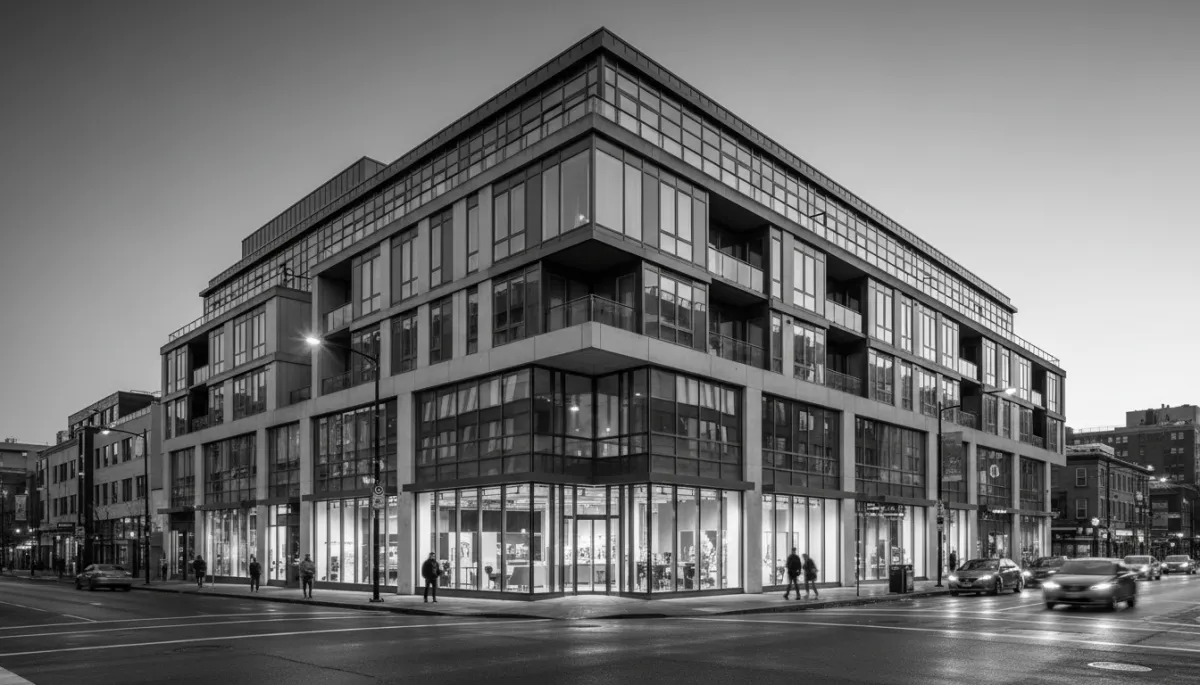
In this context, a mixed-use property is typically a street-level commercial or retail space with residential units above. Think of a coffee shop or boutique on the ground floor with three to twelve apartments stacked above it. The commercial component drives visibility and daytime traffic, while the apartments provide recurring, often more stable, rental income.
From an investment perspective, these assets can be compelling: diversified income streams, strong urban locations, and the ability to reposition either the commercial or residential side to unlock value. Yet that same blend of uses is exactly what makes traditional financing challenging.
Why Banks and Conventional Lenders Struggle With Mixed-Use Financing
Despite a robust commercial lending environment—U.S. commercial mortgage originations are forecast to reach roughly $805.5 billion in 2026, a 27% jump from 2025, according to the Mortgage Bankers Association—mixed-use assets routinely fall into a gray area. Many banks either decline these deals outright or attach conservative terms that make them unattractive for investors.
- Boxed-in underwriting guidelines: Conventional lenders often have rigid rules around how much commercial space is allowed before a property is treated as fully commercial. If the ground-floor retail exceeds a set percentage of income or square footage, the deal may no longer qualify for their standard multifamily or residential programs.
- Perceived volatility in commercial rents: Post‑pandemic, many banks remain cautious about small-bay retail and office tenants. Underwriters heavily discount or even ignore commercial income, which depresses the loan amount an investor can obtain.
- Regulatory and capital constraints: Banks must manage concentration limits, stress tests, and regulatory scrutiny. Mixed-use loans that do not fit cleanly into “multifamily” or “owner‑occupied commercial” buckets can be pushed to the bottom of the priority list.
At the same time, operating costs—insurance, taxes, and labor—have been rising faster than revenue growth for many properties, putting pressure on debt service coverage ratios (DSCRs). As the CRE Finance Council notes, this forces traditional lenders to underwrite more conservatively, further shrinking proceeds on mixed-use deals.
Real-World Scenarios: Where Financing Breaks Down
Scenario 1: The stabilized neighborhood corner
An investor is under contract to buy a four‑story corner building in a walkable urban corridor: 2,000 square feet of fully leased retail at street level and eight apartments above. The combined net operating income supports a comfortable DSCR at 70% loan‑to‑value. However, the buyer’s bank underwrites only the residential income plus a fraction of the retail rent, citing “market uncertainty” for small retailers. The resulting loan proceeds fall 15–20% short of the equity stack the buyer planned, putting the deal at risk.
Scenario 2: Value-add retail repositioning
Another investor acquires a mixed-use asset where the apartments are 95% occupied, but the ground-floor retail is partially vacant and in need of re‑tenanting. A conventional lender views the property as “unstabilized” and offers either no loan or a low‑LTV, short‑term structure with restrictive covenants. The investor needs a lender willing to look at future income and the strength of the overall business plan—not just today’s NOI snapshot.
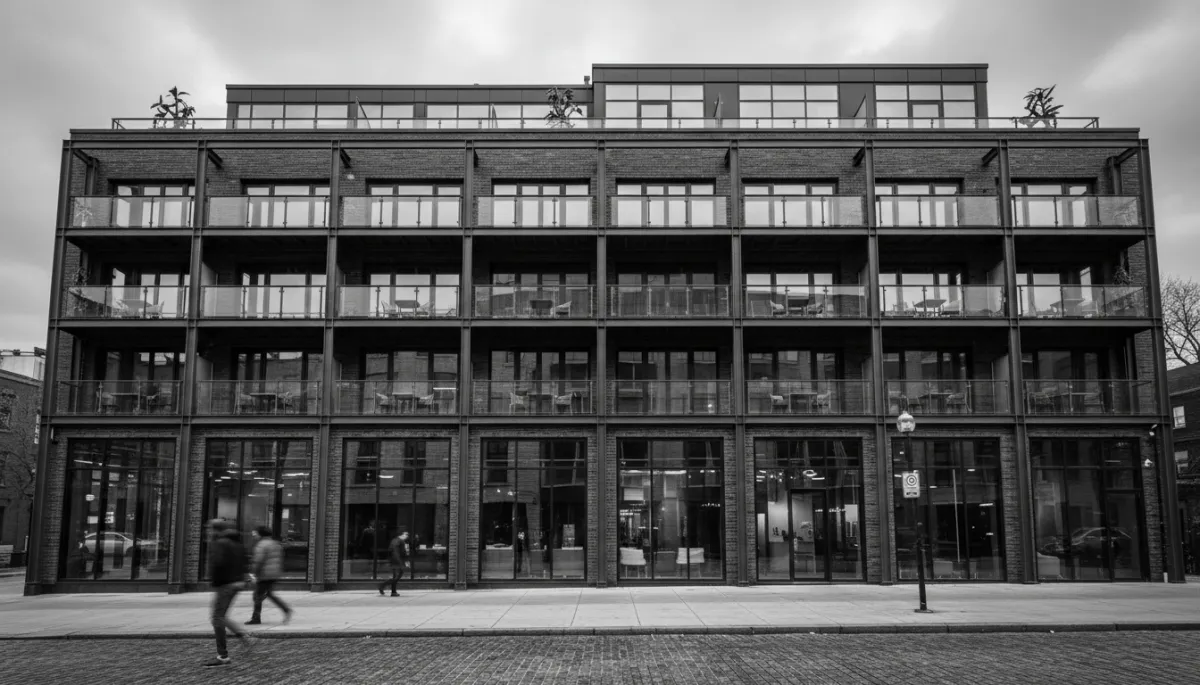
Well-located mixed-use assets often pencil on paper but fail under rigid bank underwriting.
How Private and Non-QM Lenders Like Onyx Capital Lending View Mixed-Use
As traditional banks tighten, alternative lenders have stepped into the gap. CBRE reports that alternative lenders now account for roughly 38% of non‑agency CRE loan closings, up from 34% a year earlier. Private lenders and non‑QM capital providers are increasingly the go‑to solution for mixed-use financing.
Firms such as Onyx Capital Lending specialize in real estate investor loans across asset classes, including mixed-use properties. Rather than forcing the deal into a residential or purely commercial box, they typically underwrite the full property value by:
- Evaluating both income streams—commercial and residential—on a blended basis.
- Focusing on current and achievable NOI, especially when there is a clear value‑add or lease‑up plan.
- Placing greater weight on asset quality, sponsorship, and exit strategy than on rigid borrower income documentation.
Onyx Capital Lending, for example, offers investor-focused programs where tax returns and W‑2s are not required, and pre‑qualification can be issued in roughly 24 hours. That speed and flexibility are particularly valuable in competitive urban markets where mixed-use properties trade quickly and sellers expect certainty of close.
Types of Mixed-Use Property Loans Available to Investors
While the market offers many flavors of mixed-use property loans, three structures are especially relevant for investors working with private or non‑QM lenders:
- Bridge loans: Short‑term (typically 12–36 months) financing used for acquisitions, lease‑up, and value‑add plays. In 2026, bridge rates often fall in the 8.5%–12% range, with loan‑to‑value ratios up to about 70–80%. Ideal when commercial space is under‑rented, vacant, or mid‑renovation.
- DSCR loans (non‑QM): These loans are underwritten primarily on the property’s debt service coverage ratio, not the borrower’s personal income. For small mixed-use buildings—two to four units above retail—DSCR loans with rates around 7.5%–9.5% and LTVs up to 70–75% are common, with minimum DSCRs typically at or above 1.25.
- Portfolio loans: Custom, often balance‑sheet loans used to finance multiple assets or hold a mixed-use property long‑term. These can be structured by banks or private lenders, usually with 65–75% LTV, rates in the 7%–9% range, and flexible covenants tailored to the investor’s broader portfolio strategy.
Depending on the residential‑to‑commercial mix, some investors may also access agency multifamily, CMBS, or SBA structures. But for many small to mid‑market urban mixed-use assets, private lender mixed-use solutions and non‑QM commercial loans provide the most practical path to close.
Key Qualification Requirements Investors Should Expect
While every lender has its own credit box, most mixed-use financing programs will look closely at the following:
- Debt Service Coverage Ratio (DSCR): Target DSCRs generally range from 1.20–1.35+, based on blended commercial and residential income.
- Loan-to-Value (LTV): Expect maximum LTVs in the 65–80% band, depending on asset quality, location, and whether the loan is bridge or permanent.
- Sponsorship and experience: A track record with small multifamily, retail, or previous mixed-use assets is a significant plus, particularly for value‑add or repositioning plays.
- Credit profile: Private and non‑QM lenders are often more flexible on credit scores than banks, but serious derogatories, unresolved tax liens, or recent bankruptcies will still be scrutinized.
- Business plan and exit strategy: For bridge and value‑add loans, lenders will expect a clear timeline for lease‑up, capital improvements, and eventual refinance or sale.
What to Look for in a Mixed-Use Lender
Selecting the right capital partner is as important as finding the right building. When evaluating mixed-use financing options, investors should prioritize:
- Mixed-use track record: Has the lender closed multiple deals with similar retail‑plus‑residential profiles, in comparable markets and price ranges?
- Ability to underwrite both income streams: The lender should explicitly consider commercial and residential income, not mechanically discount one side of the property.
- Speed and certainty of execution: Firms like Onyx Capital Lending that issue terms in roughly 24 hours and keep underwriting in‑house can materially improve your chances of winning competitive bids.
- Flexible structures: Look for a lender that offers bridge, DSCR, and portfolio options so you can align debt structure with your business plan and hold period.
- Transparent fees and communication: Direct access to decision‑makers and clear, upfront disclosures on rates, fees, and covenants are essential for repeat investors and portfolio builders.
Positioning Your Next Mixed-Use Acquisition for Approval
In a 2026 market defined by elevated origination volumes, a growing role for alternative lenders, and more nuanced underwriting, investors who understand the realities of commercial real estate financing for mixed-use assets have a clear edge. By partnering with a lender that truly understands these hybrid properties—and is willing to underwrite the entire income stack—you can unlock opportunities that conventional banks routinely pass over.
Whether you are pursuing your first main‑street building or adding another urban mixed-use asset to an established portfolio, focus on lenders who specialize in mixed-use property loans, embrace private lender mixed-use solutions, and offer non‑QM commercial loans designed around real investor needs—not just regulatory checkboxes. That alignment between capital and strategy is ultimately what turns complex, multi‑income properties into durable, long‑term performers in your portfolio.
