
DSCR Loans: Qualify on Rental Income, Not Tax Returns
Real Estate Investing, DSCR Loans, Rental Property Financing
DSCR Loans Explained: Qualify on Rental Income, Not Tax Returns
If you own or are acquiring rental properties, you may be frustrated by conventional lenders who fixate on W‑2s, tax returns, and strict debt‑to‑income (DTI) ratios. A DSCR loan offers a different path: you qualify primarily on the property’s cash flow, not your personal income. This structure has made DSCR financing one of the fastest‑growing tools for real estate investors nationwide.

What Is a DSCR Loan and How Does It Work?
A DSCR loan is an investment property loan that qualifies primarily on the property’s ability to cover its own mortgage payment. DSCR stands for debt service coverage ratio, a metric lenders use to measure how comfortably the rental income covers the monthly principal, interest, taxes, and insurance (often abbreviated as PITI, or PITIA when HOA dues are included).
Unlike conventional loans that demand full income documentation, tax returns, and tight DTI limits, DSCR programs focus on the asset. The lender underwrites the deal based on market rent (or actual leases), projected expenses, and your credit profile—without requiring personal income verification. For many investors, this is effectively a rental property loan no tax returns solution that aligns with how they actually build wealth: through cash‑flowing assets, not W‑2 salaries.
How DSCR Is Calculated: Net Rent Divided by PITI
At its core, DSCR is a simple formula:
DSCR = Net Rent ÷ PITI
Net Rent is typically the gross monthly rent minus a vacancy or expense factor, depending on the DSCR lender’s guidelines. PITI is the proposed monthly housing payment: principal, interest, property taxes, and insurance (plus HOA dues if applicable). Many lenders now reference PITIA to explicitly include association fees in the total debt service.
Example: If your net rental income is $2,000 per month and your projected PITIA payment is $1,600, your DSCR is:
$2,000 ÷ $1,600 = 1.25 DSCR
A DSCR of 1.25 means the property generates 25% more income than is needed to cover the mortgage payment, providing a healthy cushion for the lender and the investor.

Accurately calculating DSCR helps you forecast leverage and pricing before you apply.
Minimum DSCR Ratios in Today’s Market
As of 2026, most DSCR lenders look for a minimum DSCR of 1.0 or higher, meaning the property’s income at least covers the full PITIA payment. Industry data shows that more favorable pricing tiers typically start at 1.25 DSCR, with stronger borrowers and deals rewarded with lower rates and higher leverage. Some specialty programs allow sub‑1.0 DSCR or “no‑ratio” structures, but those usually come with higher rates, larger down payments, or both (goratehero.com; realestateskills.com).
Lenders also adjust minimums by asset class. For example, multifamily deals often target DSCR of 1.25x or better, while riskier property types such as office or hospitality may require ratios in the 1.35x–1.60x range due to market volatility (coradvisors.net). For one‑to‑four unit residential rentals—where most small and mid‑sized investors operate—DSCR thresholds tend to be more flexible, especially for experienced borrowers with strong credit and reserves.
Why Investors Prefer DSCR Loans Over Conventional Financing
For many investors, the biggest appeal of a DSCR loan is straightforward: no personal income documentation. These programs are designed as a true rental property loan no tax returns solution. Key advantages include:
- No W‑2s or pay stubs: Self‑employed investors, business owners, and full‑time landlords are not penalized for write‑offs or non‑traditional income streams.
- No DTI calculation: Instead of stacking your car loans, credit cards, and personal housing payment into a DTI ratio, the lender focuses on the property’s DSCR.
- No personal tax returns: You are not required to provide years of tax returns that may show low taxable income due to depreciation and other legal deductions.
- Scalability: Because underwriting is asset‑based, investors can often build larger portfolios without hitting the same cap that conventional guidelines impose on financed properties.
In a market where rental demand remains robust and financing standards continue to tighten, DSCR structures allow investors to move quickly on opportunities while aligning approval more closely with the asset’s performance than their personal tax strategy (federalreserve.gov; nmrk.com).
Who Qualifies for a DSCR Loan?
While documentation is lighter than conventional loans, DSCR programs still require borrowers to meet clear credit and equity standards. Typical guidelines in 2026 include:
- Credit score: Minimum FICO generally ranges from 620–660, with the best pricing often reserved for scores of 720+ (goratehero.com).
- Down payment: Expect to invest 20–25% down for a purchase, with lower down payments tied to stronger DSCR and credit profiles.
- Reserves: Lenders often require 3–12 months of PITIA reserves, depending on the risk profile of the deal.
- Experience: First‑time investors can qualify, but more favorable terms are typically offered to borrowers with a track record of owning or managing rental property.
Both individuals and business entities—such as LLCs—can obtain an investment property loan through DSCR programs, making them a natural fit for investors who hold assets in entity structures for liability and tax planning purposes.
Property Types Covered by DSCR Financing
DSCR loans are designed for income‑producing real estate. While each DSCR lender sets its own appetite, common eligible property types include:
- Single‑family rental homes (non‑owner‑occupied)
- Two‑ to four‑unit properties
- Small multifamily buildings (often up to 8–10 units, sometimes more)
- Condos and townhomes used as rentals
- Certain mixed‑use or commercial assets, depending on lender guidelines
Many DSCR programs are also friendly to short‑term rentals and Airbnb‑style properties when supported by documented market rents or appraiser‑provided income estimates, though underwriting standards can be more conservative for hospitality‑adjacent assets.
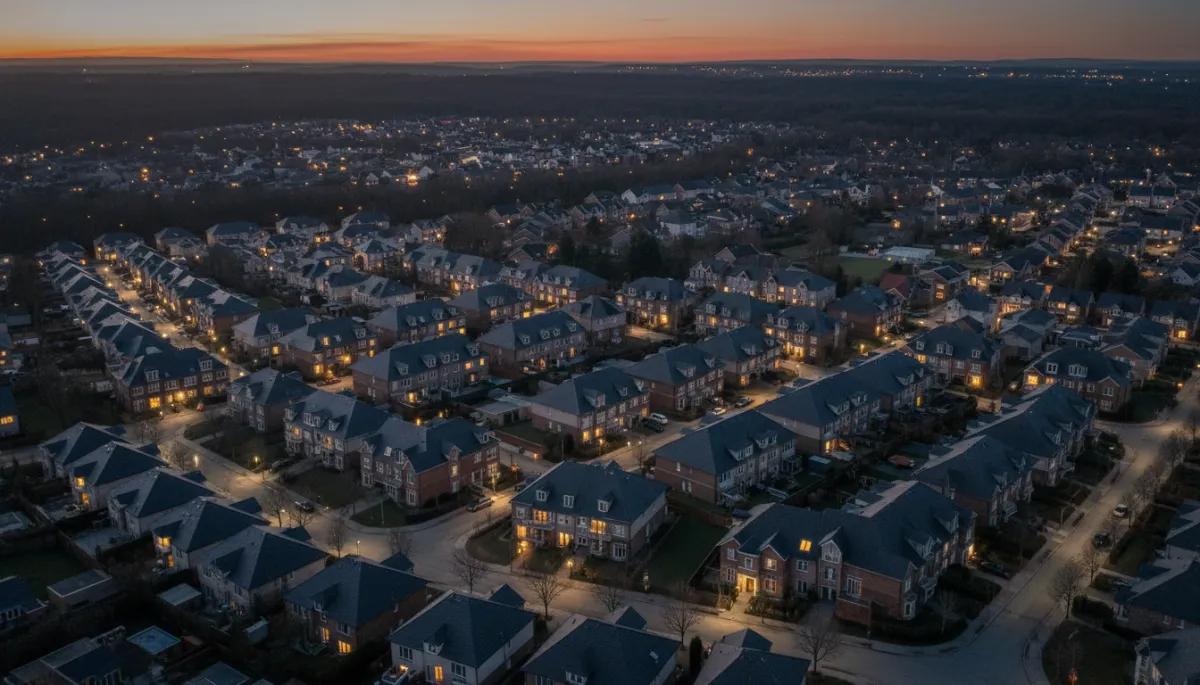
DSCR loans can support scalable portfolios across single-family and small multifamily assets.
How Onyx Capital Lending Structures DSCR Loans
Onyx Capital Lending (NMLS# 2123236), based in Providence, Rhode Island, has specialized in investor‑focused financing since 2016, funding more than $300 million in loans across 48 states. Through its platform at onyxcapitallending.com, the firm offers DSCR structures tailored to both seasoned and emerging investors seeking to scale their portfolios efficiently.
While specific terms depend on credit, DSCR, and property type, Onyx Capital Lending typically structures DSCR loans with:
- Competitive fixed and adjustable‑rate options designed around current market conditions.
- Flexible leverage, often up to industry‑standard LTV ranges for strong DSCR and credit profiles.
- Entity and individual borrowing options to match your asset‑protection strategy.
- Streamlined documentation focused on property cash flow, credit, and reserves rather than tax returns and W‑2s.
By combining DSCR underwriting with nationwide reach and an investor‑centric approach, Onyx Capital Lending positions itself as a strategic partner rather than a one‑off transaction source. For many borrowers, that means clearer expectations on DSCR requirements, faster timelines, and more predictable capital as they grow their holdings.

Experienced DSCR lenders translate complex guidelines into clear, actionable financing strategies.
DSCR Loan FAQs
Below are concise answers to common questions investors ask when evaluating DSCR financing options.
1. Can I qualify for a DSCR loan with no personal income?
Yes. DSCR programs are specifically designed so that you do not need to document personal income through W‑2s, pay stubs, or tax returns. The focus is on the property’s rental income, DSCR, your credit score, and available reserves. However, you must still demonstrate the ability to close—typically through verified assets for down payment, closing costs, and reserves.
2. What DSCR do I need to get approved?
Many investors are approved with a DSCR of 1.0 or higher, meaning the property’s net rent fully covers the PITIA payment. To access better pricing and potentially higher leverage, aim for a DSCR of 1.20–1.25+. Some programs may consider sub‑1.0 DSCR deals, but you should expect higher rates, lower LTV, or both to offset the increased risk (goratehero.com; dscrfinder.com).
3. Are DSCR loans only for experienced investors?
No. First‑time investors can qualify, particularly on simpler one‑ to four‑unit properties. That said, lenders may offer more conservative terms—such as slightly lower LTV or higher reserve requirements—until you establish a track record. Experienced investors with multiple properties often benefit from more flexible structures and faster underwriting due to their demonstrated performance.
4. How do appraisers determine rent for DSCR loans?
For long‑term rentals, appraisers typically complete a comparable rent schedule, analyzing similar properties in the area to estimate market rent. Lenders may use this market rent, the actual lease amount, or the lower of the two, depending on program guidelines. For short‑term rentals, some lenders accept documented historical income or specialized appraisals that reflect seasonal and occupancy patterns.
5. How do DSCR loan rates compare to conventional mortgage rates?
DSCR loan rates are generally higher than owner‑occupied conventional mortgage rates because they are non‑QM, investor‑focused products. Industry data in 2026 shows typical DSCR rates ranging from the mid‑6% to high‑8% range, depending on DSCR, credit score, LTV, and property type (dscrfinder.com; realestateskills.com). Many investors accept this premium in exchange for the ability to qualify based on property cash flow and to scale beyond conventional lending caps.
